Northern and Southern DynastiesAD 420–589
Fan Zhen Writes On the Extinction of the Soul
Southern Dynasties
Fan Zhen's On the Extinction of the Soul argued that “when the body remains, the spirit remains; when the body perishes, the spirit perishes,” a systematic atheism that attacked Buddhist karma.
View on the timeline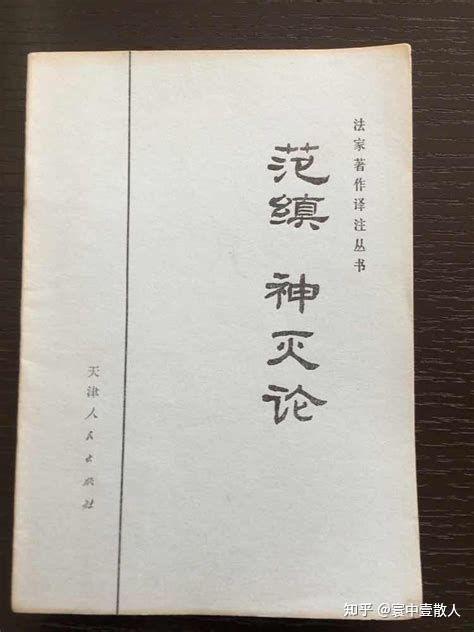
In the turbulent Wei, Jin and Northern and Southern Dynasties, people turned to Buddhism to escape hardship, and rulers also supported it, so that Buddhism flourished and many temples were built everywhere. Thus there were always some who opposed it, the most famous being Fan Zhen, a thinker of the Southern Qi and Liang. Fan Zhen (c. 450–c. 515), courtesy name Zizhen, was from Wuyin in Nanxiang (present-day Biyang, Henan). Under the Southern Qi, Xiao Ziliang, Prince of Jingling, was a devout Buddhist and gathered guests in his residence to preach the teaching. He asked Fan Zhen: “You don't believe in karma, so why are people rich or poor, noble or humble?” Fan Zhen replied that life is like flowers on a tree, falling with the wind; some land on fine mats and some in a cesspit, and wealth and poverty are chance fortunes unrelated to karma. Fan Zhen later wrote On the Extinction of the Soul, a systematic statement of atheism. He held that “the body is the substance of the spirit and the spirit is the function of the body”: spirit and body are an inseparable whole, so there is spirit only where there is body, and when the body dies the spirit vanishes, that is, “when the body remains, the spirit remains; when the body perishes, the spirit perishes.” He also used the analogy of a blade and its sharpness: sharpness cannot exist apart from the blade; likewise without the body there is no spirit. The essay shook the court and the public. Under Emperor Wu of Liang, when Buddhism was honored as the state religion, the emperor organized over sixty people to write refutations, and Fan Zhen declared he would never “sell his argument for office.” It is an important work of materialist thought in ancient China.
References
Text and images from Wikipedia are used under CC BY-SA and their respective licenses