Western Han202 BC–AD 8
The Taichu Calendar and the 24 Solar Terms
104 BC
In 104 BC Emperor Wu issued the Taichu Calendar, which began the year in the first month and was the first to formally include the 24 solar terms, an influence lasting to this day.
View on the timeline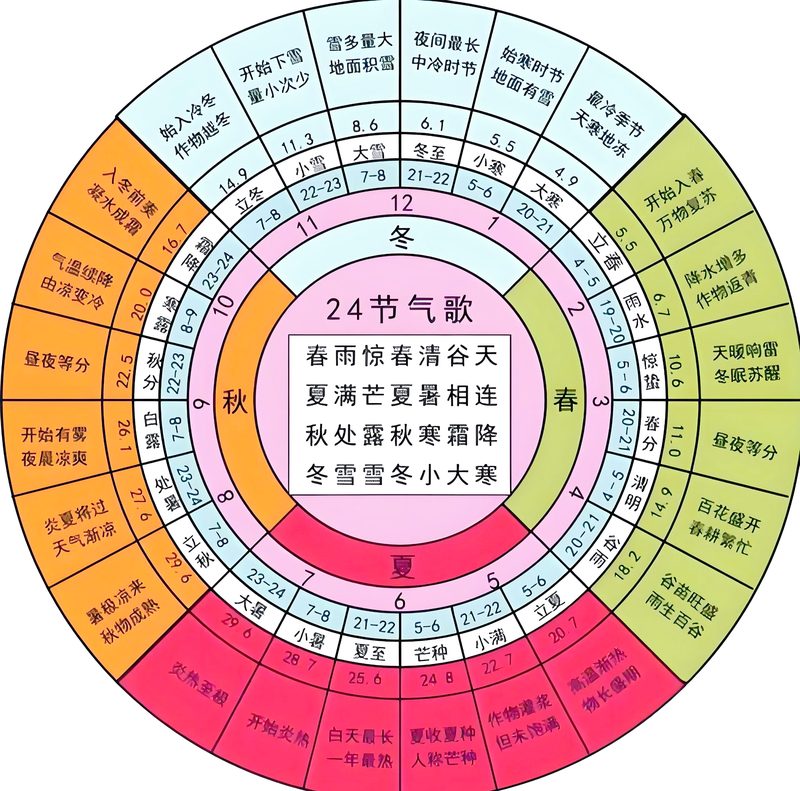
The early Han used the Qin Zhuanxu Calendar, which began the year in the tenth month. After a century it had drifted from the real heavens. In 104 BC Emperor Wu ordered a revision; Deng Ping, Luoxia Hong, Tang Du, Sima Qian and others compiled a new calendar and issued it that year. Since the era name was changed to Taichu that year, it was called the Taichu Calendar. It began the year in the first month, and for over two thousand years, with few exceptions, China has kept the first month as the start of the year, down to the present lunar calendar. The Taichu Calendar was lunisolar: months followed the moon's phases, with the new moon as the first day of each month and months of 30 or 29 days; years followed the tropical year of a little over 365 days; and a month without a major solar term was made a leap month. Most important, it was the first calendar to formally include the 24 solar terms. Ancient people divided the year into 24 segments of about 15 days each according to the sun's position on the ecliptic: Beginning of Spring, Rain Water, Awakening of Insects, Spring Equinox, Clear and Bright, Grain Rain, Beginning of Summer, Grain Buds, Grain in Ear, Summer Solstice, Minor Heat, Major Heat, Beginning of Autumn, End of Heat, White Dew, Autumn Equinox, Cold Dew, Frost's Descent, Beginning of Winter, Minor Snow, Major Snow, Winter Solstice, Minor Cold and Major Cold. They reflect changes in season, climate and natural phenomena and were vital to farming. The Taichu Calendar was later edited by Liu Xin into the Santong Calendar, China's earliest surviving complete calendar. In 2016 the “Twenty-Four Solar Terms” were inscribed on UNESCO's Representative List of the Intangible Cultural Heritage of Humanity.
References
Text and images from Wikipedia are used under CC BY-SA and their respective licenses