Shangc. 1600–1046 BC
Pangeng Moves the Capital to Yin
c. 1300 BC
The early Shang moved its capital many times; King Pangeng relocated it to Yin (present-day Anyang, Henan), where it stayed over 200 years and Shang rule stabilized.
View on the timeline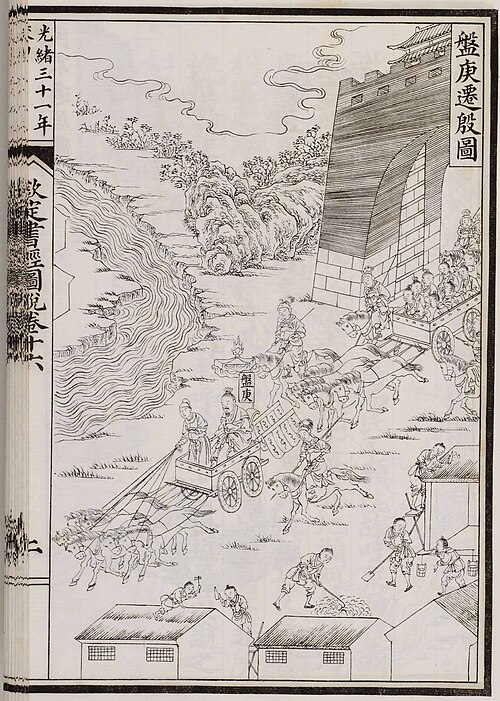
After the Shang was founded, because of struggles for the throne within the royal house, Yellow River floods and wars abroad, the capital was moved many times in the early period, known as “eight moves before, five after.” About 1300 BC King Pangeng overcame noble opposition and moved the capital to Yin (northwest of present-day Anyang, Henan), urging his subjects to settle and prosper. After the move to Yin, Shang politics stabilized, and until the dynasty fell, over 250 years, the capital was never moved again; hence the Shang is also called “Yin” or “Yin-Shang.” Under Pangeng's nephew Wuding, who employed able ministers such as Fu Yue and campaigned against the Guifang, Tufang and other tribes, the state reached its height, known as the “Wuding Restoration,” and the area under Shang control kept expanding. To consolidate rule, the Shang set up prisons and harsh punishments and tightened control of commoners and slaves. Slaves had no personal freedom and were forced to labor in fields and workshops; they were often sacrificed to ancestors or buried with their masters, and one large royal tomb at Anyang held several hundred such victims. The Yin capital site is today's Yinxu; scientific excavation began in 1928 and revealed palace and ancestral temple foundations, 13 royal tombs and thousands of commoner graves and craft workshops, with many oracle bones and bronzes, including the tomb of Wuding's wife Fu Hao. Yinxu is the first Shang capital in Chinese history verified both by texts and by archaeological excavation and oracle bone inscriptions, and was added to the World Heritage List in 2006.
References
Text and images from Wikipedia are used under CC BY-SA and their respective licenses