TangAD 618–907
Fall of the Sui and Founding of the Tang
AD 618 · Sui → Tang
Emperor Yang of Sui's extravagance and overuse of labor sparked peasant uprisings; in AD 618 he was killed and Li Yuan took the throne at Chang'an, founding the Tang.
View on the timeline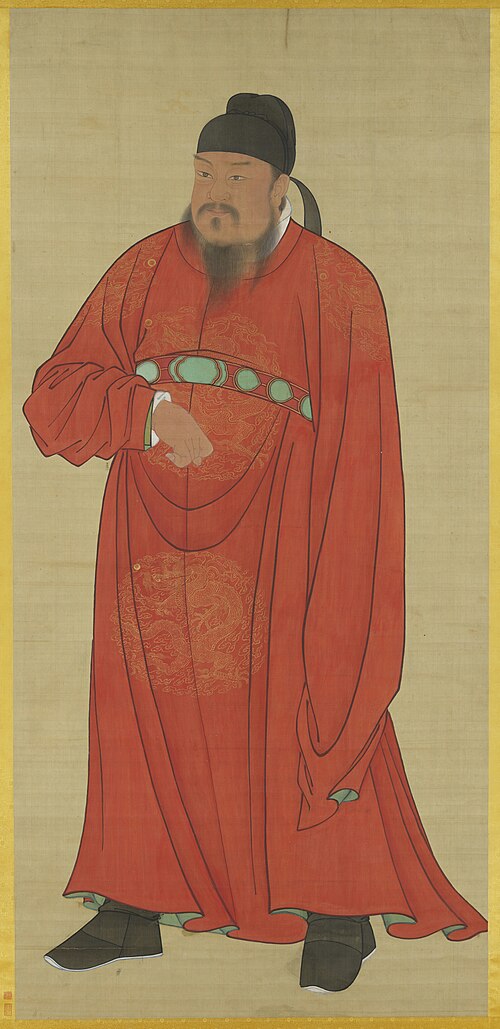
Emperor Wen of Sui lived frugally and once warned the crown prince that no emperor since ancient times had loved luxury and lasted long. But his son Emperor Yang, Yang Guang, after taking the throne, loved grand schemes, spared no thought for the people's strength, and indulged in boundless extravagance. During his reign, building the eastern capital Luoyang used two million laborers a month, and digging the Grand Canal, repairing the Great Wall and building imperial roads conscripted millions more; he made many grand tours by dragon boat and launched three wars against Goguryeo, each drawing over a million soldiers and laborers. Heavy service killed many, fields lay waste, and social tensions sharpened. In AD 611 Wang Bo first rose at Mount Changbai (around present-day Zhangqiu, Shandong). Peasant uprisings then broke out everywhere, the most influential being the Wagang army in Henan, Dou Jiande's army in Hebei and Du Fuwei's army in the Jiang–Huai region. Under Li Mi and Zhai Rang, the Wagang army took the Luokou granary and distributed its grain, growing quickly. Emperor Yang, trapped at Jiangdu (present-day Yangzhou, Jiangsu), was strangled in 618 by Yuwen Huaji and other imperial guard officers, and the Sui fell after only thirty-odd years. In the chaos at the end of the Sui, the noble Li Yuan, who garrisoned Taiyuan, rose in 617, took Chang'an, and enthroned Emperor Yang's grandson Yang You. In 618 Li Yuan deposed Yang You and took the throne, founding the Tang with Chang'an as capital; Li Yuan was Emperor Gaozu of Tang. Under Li Shimin and others the Tang spent about ten years destroying rival regimes and largely unified the country. The Sui's fall after two reigns became a lesson for the early Tang rulers.
References
Text and images from Wikipedia are used under CC BY-SA and their respective licenses