People's Republic of China1949–present
War to Resist US Aggression and Aid Korea
October 1950–July 1953
In October 1950 the Chinese People's Volunteers entered the Korean War against the "UN forces"; an armistice was signed in July 1953.
View on the timeline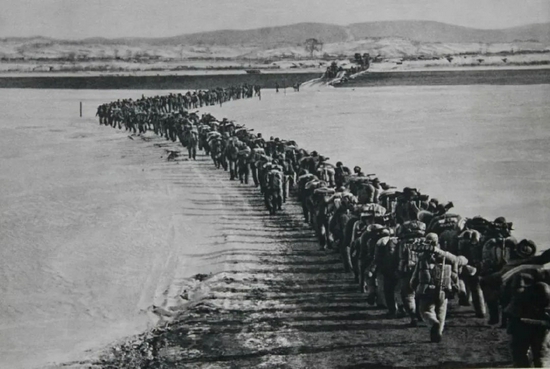
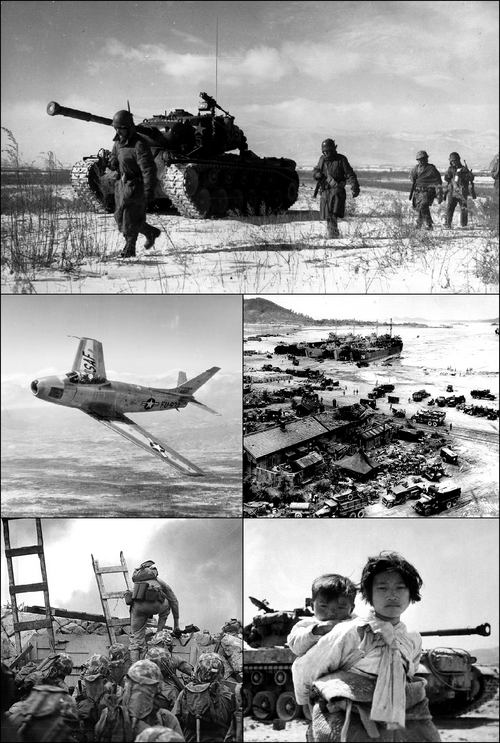
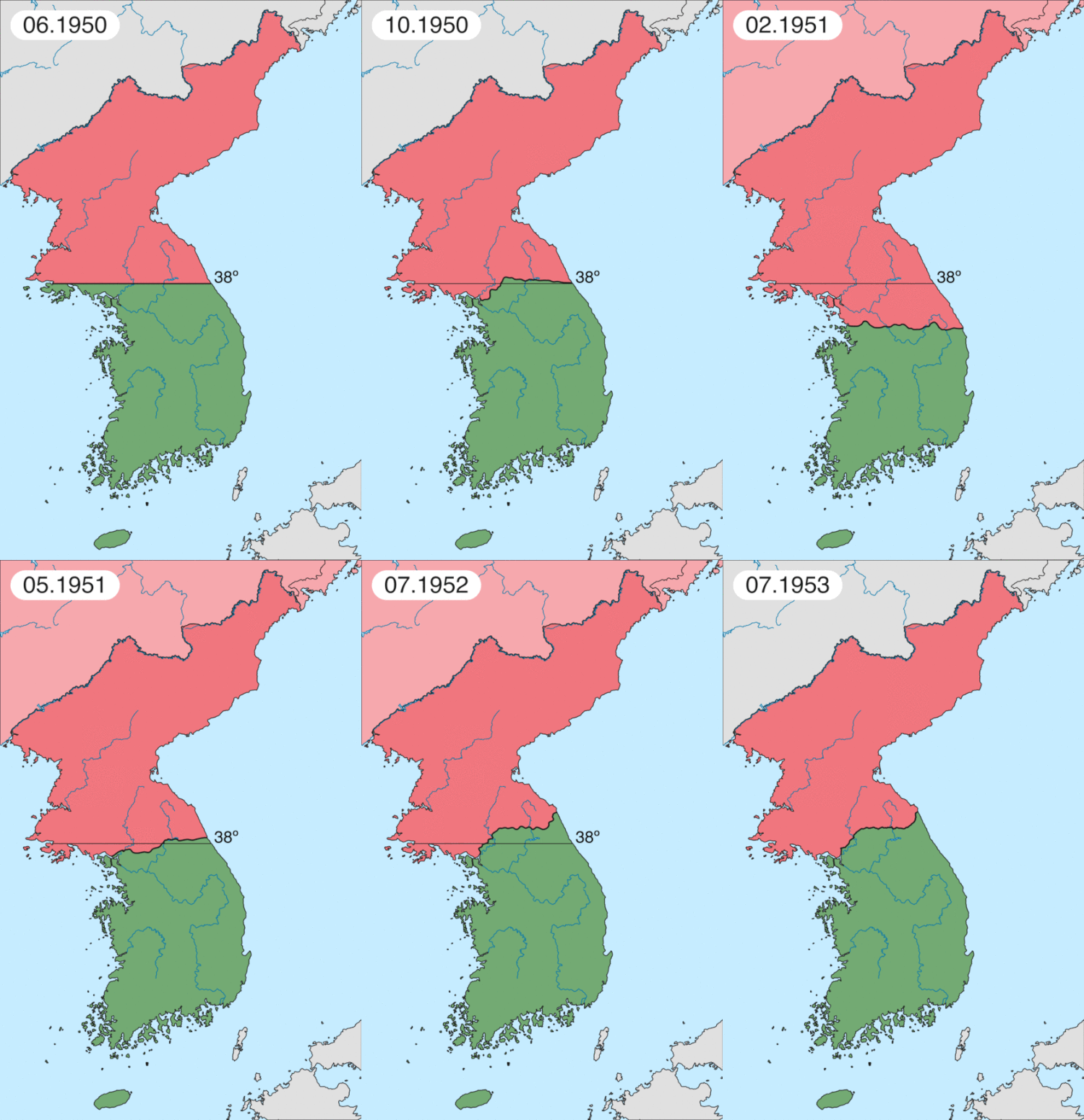
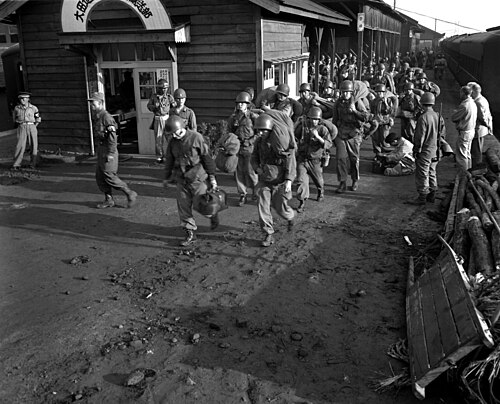
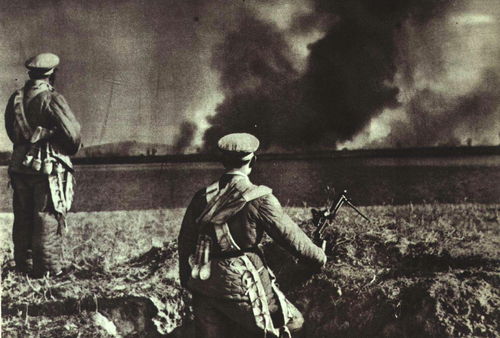
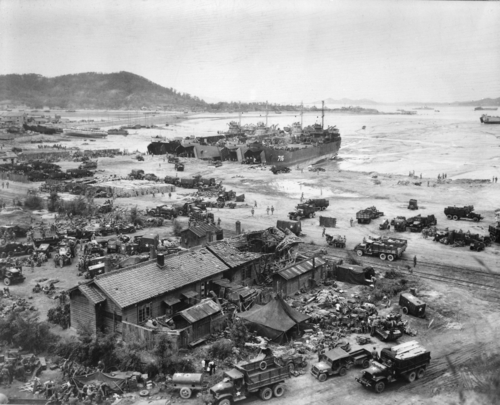
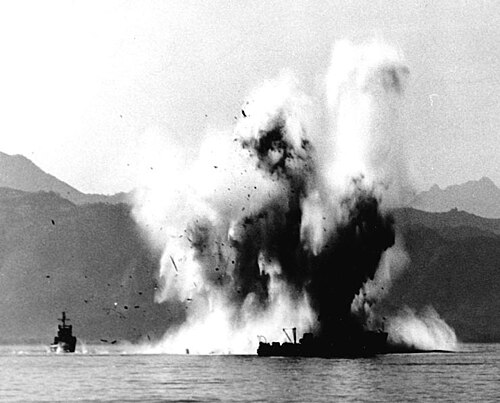
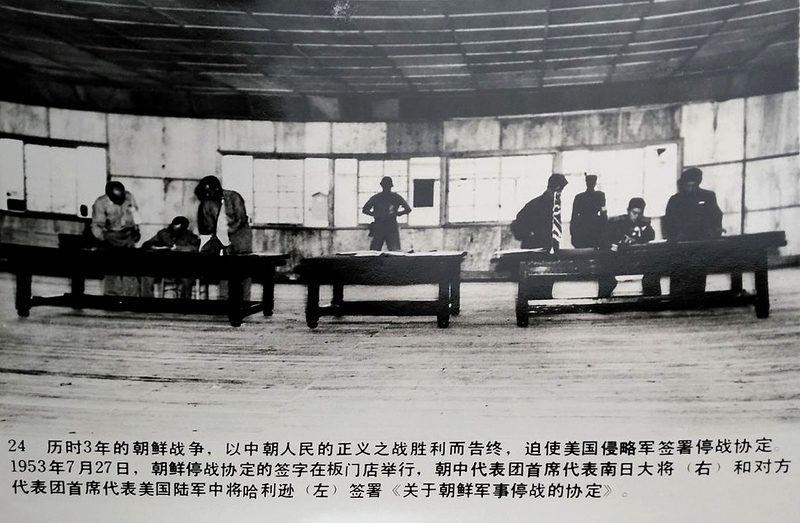
The Korean civil war broke out on 25 June 1950. The US government decided to intervene militarily and sent the Seventh Fleet into the Taiwan Strait. The United States then maneuvered the UN Security Council into passing resolutions that formed "UN forces" made up mainly of US troops, which crossed the 38th Parallel and advanced toward the Yalu River on the China-Korea border, bombing China's northeastern border areas. At the request of the Korean government, the Party Central Committee made the strategic decision to "resist US aggression, aid Korea, and defend the homeland." On 19 October 1950 the Chinese People's Volunteers, with Peng Dehuai as commander and political commissar, crossed the Yalu River into Korea and fought their first battle on 25 October. Fighting alongside the Korean People's Army, they drove the "UN forces" from the Yalu back to the vicinity of the 38th Parallel in five campaigns, after which the war entered a phase of fighting while negotiating. In 1952 the Volunteers held out stubbornly at Shangganling and crushed the "UN forces'" attacks. Many heroes emerged among them: Huang Jiguang blocked an enemy machine-gun port with his chest; Qiu Shaoyun died in flames rather than reveal his position; Yang Gensi clutched an explosive pack and died together with the enemy; and Mao Zedong's son Mao Anying also died on the Korean battlefield. On 27 July 1953 the two sides signed the Korean Armistice Agreement at Panmunjom. The victory protected China's security, won New China a relatively stable and peaceful environment for development, and greatly raised its international standing. In the war over 190,000 Volunteers gave their lives.
References
Text and images from Wikipedia are used under CC BY-SA and their respective licenses