Republic of ChinaAD 1912–1949
Marco Polo Bridge Incident
7 July 1937
On 7 July 1937 Japanese troops, claiming a soldier had gone missing, attacked Wanping and the Marco Polo Bridge; Chinese defenders resisted, and the incident began China's all-out War of Resistance.
View on the timeline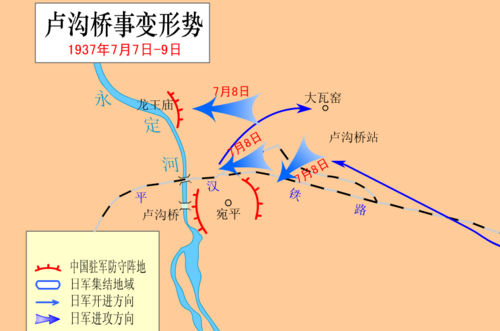
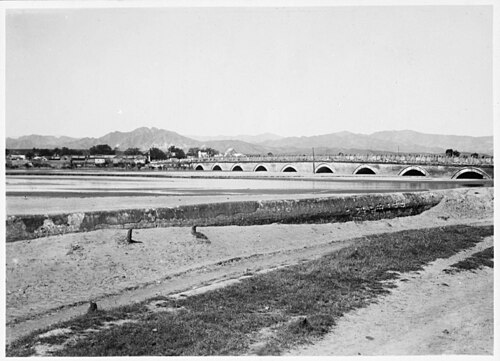
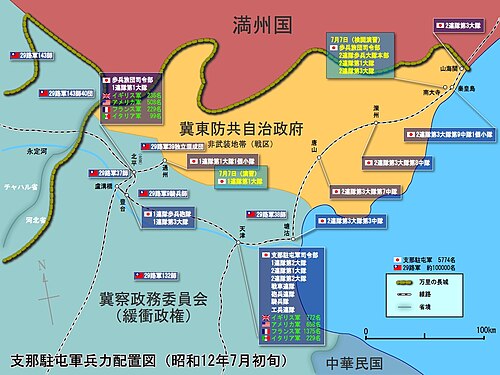
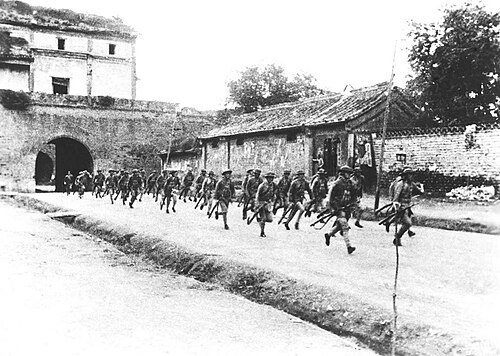
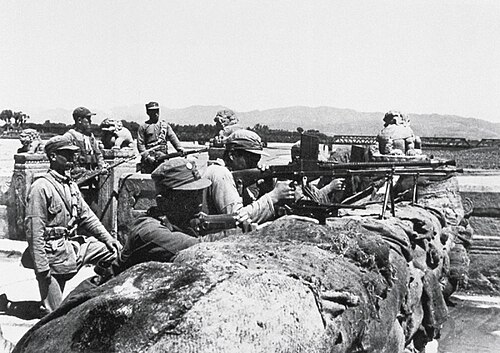
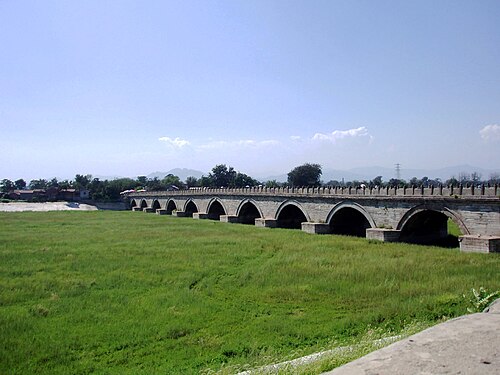
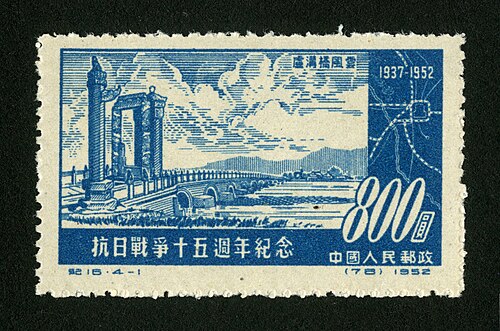
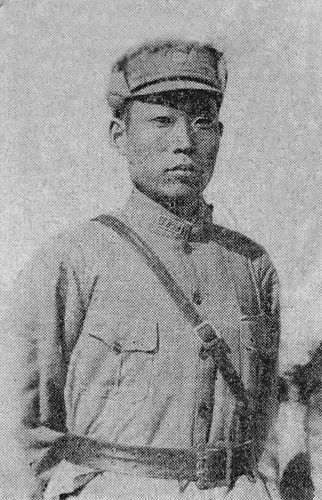
On the evening of 7 July 1937 Japanese troops stationed at Fengtai, southwest of Beiping, held military exercises near the Marco Polo Bridge and, claiming that a soldier had “gone missing”, demanded to enter Wanping town to search, which Chinese troops sternly refused. The well-prepared Japanese then attacked Wanping and the bridge, and the Chinese defenders, the regiment of Ji Xingwen of the 37th Division of the 29th Army, resisted. This was the incident that shocked China and the world, known as the July 7th Incident or Marco Polo Bridge Incident. It marked the start of Japan's long-planned full-scale war of aggression against China and of the whole nation's resistance. The day after, the Communist Party telegraphed: “Peiping and Tianjin are in peril! North China is in peril! The Chinese nation is in peril! Only resistance by the whole nation is our way out!” On 17 July Chiang Kai-shek said at Lushan that “if war once begins, there will be no distinction between north and south, old and young; everyone will have the responsibility of defending the land and resisting, and must resolve to sacrifice everything”. In late July Japanese troops launched a general attack on Beiping and Tianjin, and Deputy Army Commander Tong Linge and Division Commander Zhao Dengyu died heroically at Nanyuan. By the end of July Beiping and Tianjin had fallen. In September the Kuomintang's Central News Agency published the Communist Party's declaration on Kuomintang–Communist cooperation, and Chiang made a statement in effect recognizing the Communist Party's legal status, marking the formal formation of the anti-Japanese national united front based on cooperation of the two parties. The nationwide resistance began.
References
Text and images from Wikipedia are used under CC BY-SA and their respective licenses